
Nova Scotia and Newfoundland
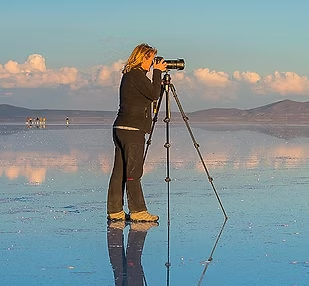
A photo journey to the northern east coast of Canada – the «Atlantic Playground»
Newfoundland and Nova Scotia. These names alone evoke a longing – for rugged nature, salty sea air, and the feeling of being far, far away. It was a long-cherished dream to explore this remote corner of Canada with my camera. In June 2025, the time had finally come: The journey first took me to visit dear friends in Nova Scotia. Then it was off on a photographic journey along the breathtaking coast of Newfoundland, past lighthouses, to see the charming puffins, through colorful fishing villages, and right into the dramatic scenery of Iceberg Alley.
Nova Scotia – Between coastal light and vibrant colors
Nova Scotia, the Canadian province known for its rugged coastlines, charming fishing villages, and spectacular light. From bustling Halifax to the quiet corners of Cape Breton – every stop was a photographic delight.
Due to a technical malfunction of the aircraft, my journey to Halifax was delayed by a day, and I had to really push myself in the already rather limited time – unfortunately.
The Blue Cottage – a visit with friends
During my stay, I was fortunate enough to stay with my dear friends Pam and Jean-Pierre at their charming Blue Cottage, just a stone's throw from the beach. The connection to their old home is clearly evident in their lovingly furnished B&B. From here, I set off on my explorations.
Lunenburg – A colorful UNESCO jewel
My journey first took me south to Lunenburg, one of the most picturesque places in the entire province. The old town, with its colorful wooden houses, crooked streets, and sailing ships, was like a living painting.
I continued along the Lighthouse Route to Mahone Bay. The three striking churches situated on the water make for a great subject, even if the wind didn't quite produce the desired reflections. In the small fishing village of Blue Rocks, the wind was much kinder to me. While I was photographing the fishermen's houses, a sandpiper visited me and posed so charmingly that I lost track of time and suddenly had to hurry to my evening spot.
Peggy's Cove – Where the sea writes stories
Of course, a visit to Peggy's Cove was a must. The iconic lighthouse perched atop the smooth granite boulders is an absolute must-see. Even if you've seen it countless times in photos, the experience of being there in person is incomparable. The wildfires in central Canada and the ash particles in the air treated me to a breathtaking sunset. I could hardly tear myself away from this place.
For me, as a Swiss citizen and resident near the airport, Peggy's Cove also holds a tragic significance. In 1998, Swissair Flight 111 crashed into the Atlantic Ocean here, and all 229 passengers lost their lives.
Cape Breton – Natural Drama and Quiet Beauty
The next leg of the journey was a circumnavigation of Cape Breton Island on the famous Cabot Trail. This scenic route encircles the entire northern part of Cape Breton, winding along rugged cliffs and forested mountains, climbing and descending them. Spectacular views of the Atlantic Ocean unfold at every turn. A highlight of the trip was hiking the Skyline Trail along the rocky coastline.

Here I "would have" had magnificent panoramic views of the roaring sea and the majestic mountains. A violent thunderstorm thwarted my plans. I waited for about 90 minutes under a spruce tree, hoping the storm would pass quickly. But it didn't; it poured with rain. Disappointed, I trudged back to the car in the downpour.
I was the only guest at my accommodation – a six-room motel. The somewhat eccentric owner peppered me with questions at check-in: "Where are you from? Where are you traveling to? Are you really traveling alone?" I felt a bit like I was at Bates Motel and actually double-checked that my room door was locked. 😊

Halifax – The vibrant port city
My limited time allowed for a short visit to Halifax, the provincial capital. The bustling harbor, with its old warehouses, sailboats, and fishing vessels, was a wonderful blend of maritime charm and urban life. The three-kilometer-long Halifax Waterfront Boardwalk is perfect for strolling and watching the vibrant activity on the quays.
Then it was time to say goodbye to Nova Scotia; the next adventure awaited me: a two-week photography trip to Newfoundland. A short flight from Halifax to St. John's where I had the pleasure of meeting the other participants of the photo tour.
Newfoundland – Two weeks of photographic bliss on the Atlantic coast
Lighthouses, wild coastlines and sunsets
Few things embody the maritime romance of Newfoundland better than its lighthouses. For centuries, these lighthouses have stood defiant against the Atlantic amidst this rugged landscape. Add to that the fishing villages with their colorful wooden houses, rusty shipwrecks, the cries of seagulls, and the wail of foghorns. This is precisely what makes the place so captivating. Particularly impressive is the Cape Spear Lighthouse, the easternmost point of North America. Nowhere else are you closer to Europe than here, where the sun is the first to greet the continent.
Gannets and puffins – the joy of feathered friends
Cape St. Mary's is home to one of the largest gannet colonies in North America. The path to the cliff leads through grassland. Even as we approached, the colony announced its presence with a cacophony of piercing screeches. Upon arrival, the sight was breathtaking. Thousands of gannets, these majestic seabirds with their snow-white plumage, black wingtips, and honey-yellow heads. They soar upwards in elegant spirals, plunge swiftly into the sea, or glide low overhead with outstretched wings.
No less spectacular was our visit to Elliston, a rocky island just off the coast. We were only a few meters away from the small, colorful puffins busily settling into their nests on the rocky island. Their bright beaks and clumsy landings are a feast for any photographer. We were fortunate enough to visit this spot twice, once during a perfect sunrise – pure puffin kitsch.
Whale Watching – Encounter with the Giants of the Seas
What an exciting adventure – we sped out of the harbor in the Zodiac at breakneck speed into the wide bay in search of whales. Even though the sea was rather calm, we had to hold on tight, absorb the jolts, and keep an eye on our equipment.
Then we stopped; the silence was soothing. We scanned the water with binoculars, hoping to hear the whales blowing. There! A jet of water shot vertically into the air. Just seconds later, a massive, craggy back emerged from the water: a sperm whale. Slowly, as if in slow motion, it glided through the surface – majestic, primal. Then its back arched, a brief moment of suspense, and with an elegant movement, its enormous tail fluke lifted from the sea. Drops glistened in the sun before it disappeared silently. The dive began – down to 2,000 meters, for about an hour. And what remained was pure goosebumps! We were fortunate enough to witness and photograph an incredible six sperm whale sightings.
Towards the end of the tour, our skipper spotted a wider, lower blow. A new highlight was about to unfold. A fin whale, the second largest animal on Earth, was plowing through the water. Its dimensions are incredible – over 20 meters long, five times the length of our Zodiac. The slender body with its distinctive sickle-shaped fin glided past just below the surface. You could see the shimmering skin, the power of the movement, the silent glide of an ocean giant. Pure goosebumps once again!
Twillingate – The Iceberg Capital
Twillingate, located on the so-called "Iceberg Alley," is one of the best places in the world to photograph icebergs up close. The 10,000-year-old ice breaks off from glaciers in Greenland and is carried by the Labrador Current and wind all the way to Newfoundland.
The icebergs sometimes travel for up to three years, drifting past the coast or becoming stuck in bays. Thousands of years of ice are turning back into water.
And what incredible luck we had with the photos! In a bay near Twillingate, we found a colossal rock over 60 meters high, shaped like the Matterhorn. In front of it was a dilapidated boathouse, and in the distance, storm clouds – the scene couldn't have been more perfect.
One of the participants approached a fisherman at the harbor and spontaneously persuaded him to take us on a boat trip. This allowed us to exclusively chug around the massive iceberg in a small fishing boat and fill our memory cards with photos. Thanks, Hansjörg, for this spontaneous gesture!
Colorful fishing villages – like something out of a painting
Newfoundland's villages are a riot of yellow, blue, red, and green – almost as if they were defying the often harsh weather. I was particularly taken with Trinity, with its lovingly restored wooden houses, and Bonavista, with its picturesque harbor. Time seems to have stood still here; everything was peaceful, honest, and authentic.
Conclusion – Photographic bliss on the Atlantic coast
My journey through Newfoundland's almost untouched wilderness will remain unforgettable. The combination of dramatic coastline, fascinating wildlife, Arctic icebergs, and picturesque villages is a photographer's paradise. Anyone who loves nature won't just see Newfoundland—they'll feel it.
I hope I was able to entertain you with my travelogue and photos and give you a small glimpse into the magic of the Canadian Atlantic provinces of Nova Scotia and Newfoundland.
Thank you for your attention. Warmly, Irene
This wonderful photo tour will be offered again in June 2027 by Thomas Heitmar (Thomas Heitmar Photography & Publishing) . If you enjoy photography, love the great outdoors, and crave experiences off the beaten track, then you shouldn't miss this adventure!


Comments